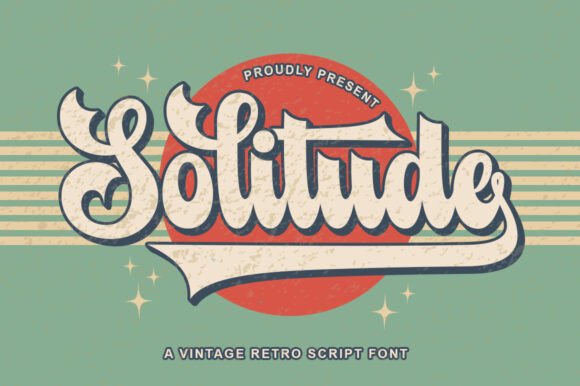
Solitude: The Vintage Display Font with Timeless Charm
There’s something magnetic about design that feels both familiar and fresh. Maybe it’s the curve of a letter that reminds you of a neon sign from a 1950s diner, or the weight of a serif that echoes old book covers. That kind of visual nostalgia doesn’t happen by accident—it’s crafted. And that’s exactly where Solitude comes in. This playfully nostalgic display font captures a retro spirit while staying versatile enough for modern projects. Whether you’re building a brand from scratch or refreshing a visual identity, Solitude offers a distinct personality that can make your work stand out.
Why Solitude Feels So Visually Appealing
What makes a font feel “right” often comes down to subtle details. Solitude balances boldness with elegance, giving each character enough presence to command attention without overwhelming a layout. Its letterforms draw inspiration from mid-century typography—think rounded terminals, moderate contrast, and a slightly condensed structure that feels both retro and refined. This isn’t a font that whispers; it speaks clearly, making it ideal for headlines, logos, and any design where you want text to carry weight.
Unlike overly stylized display fonts that sacrifice readability for flair, Solitude maintains clarity even at larger sizes. That’s a practical advantage many designers overlook. You want a typeface that looks beautiful, but also one that communicates effectively. Solitude does both, which is why it’s become a favorite for projects ranging from branding to editorial design.
Where Solitude Truly Shines: Real-World Applications
Let’s talk about where this font can actually make a difference. If you’re working on a logo, Solitude’s distinctive curves and balanced proportions help create marks that feel memorable and professional. It’s especially effective for brands that want to convey a sense of heritage, craftsmanship, or creativity—think artisanal food products, boutique shops, or lifestyle blogs.
For packaging design, the font’s vintage character adds instant personality. Imagine it on a coffee bag label, a craft beer bottle, or a skincare product box. It tells a story before the customer even reads the words. That kind of emotional connection is powerful, and typography plays a bigger role in it than many realize.
Social media graphics are another area where Solitude can elevate your content. Whether you’re creating Instagram stories, Pinterest pins, or promotional banners, a strong display font helps your posts stand out in crowded feeds. Pair it with a clean sans serif for body text, and you’ve got a visual system that’s both eye-catching and easy to read.
Don’t overlook print materials, either. Posters, invitations, flyers, and even merchandise like t-shirts or tote bags benefit from fonts with character. Solitude’s retro vibe works particularly well for event promotions, music festivals, or any project that wants to evoke a sense of nostalgia or fun.
Building a Stronger Brand with Thoughtful Typography
Typography is one of the most underrated tools in branding. The right typeface doesn’t just look good—it helps build recognition, consistency, and trust. When you choose a font like Solitude for your brand identity, you’re making a deliberate choice about how you want to be perceived. Its vintage charm suggests authenticity, creativity, and attention to detail—qualities that resonate with audiences across industries.
Think about how major brands use typography to reinforce their message. A tech startup might choose a geometric sans serif to appear modern and innovative. A bakery might use a handwritten script to feel approachable and homemade. Solitude fits somewhere in between—it’s polished enough for professional use but has enough personality to feel human. That balance makes it versatile for entrepreneurs, small businesses, and content creators who want to stand out without looking overly corporate.
Visual consistency is another key benefit. When you use the same typeface across your website, social media, and print materials, you create a cohesive experience that makes your brand more recognizable. Solitude’s range of styles—often including regular, bold, and italic variations—gives you flexibility while maintaining that unified look.
Practical Tips for Using Display Fonts Effectively
Choosing a display font is just the first step. How you use it matters just as much. Here are a few practical considerations to keep in mind when working with Solitude or any other creative typeface:
- Pair it wisely. Display fonts work best when balanced with simpler typefaces. Try combining Solitude with a neutral sans serif for body text to ensure readability without sacrificing style.
- Consider context. A font that looks great on a poster might not work as well on a website. Test Solitude at different sizes and in different environments to see where it performs best.
- Don’t overuse it. Reserve display fonts for headlines, logos, or accent text. Using them for long paragraphs can tire readers’ eyes and reduce engagement.
- Check licensing. If you’re using Solitude for commercial projects, make sure you have the appropriate license. Many premium fonts offer different tiers depending on usage.
- Explore all styles. Some fonts include alternate characters, ligatures, or stylistic sets. Take time to explore what Solitude offers—you might find variations that perfectly suit your project.
Readability should always be a priority, even with stylized fonts. If your audience has to squint or struggle to read your text, the design isn’t working. Fortunately, Solitude’s thoughtful design helps maintain legibility, but it’s still worth testing across devices and print formats.
Final Thoughts on Choosing the Right Font for Your Project
Typography is more than just picking something that looks nice. It’s a strategic decision that affects how your audience perceives your work. A font like Solitude offers a unique blend of nostalgia and professionalism, making it suitable for a wide range of applications—from digital products to print materials, from branding to social media graphics.
The best way to know if a font works for you is to experiment. Try it in a mock-up, see how it pairs with other typefaces, and imagine it in the context of your actual projects. Sometimes the right font clicks immediately; other times, it grows on you as you see its potential unfold.
Whatever your creative goals, having a versatile, well-designed typeface in your toolkit is always a smart move. And if you’re looking for something with character, warmth, and a touch of retro flair, Solitude might just be the font that brings your next project to life.