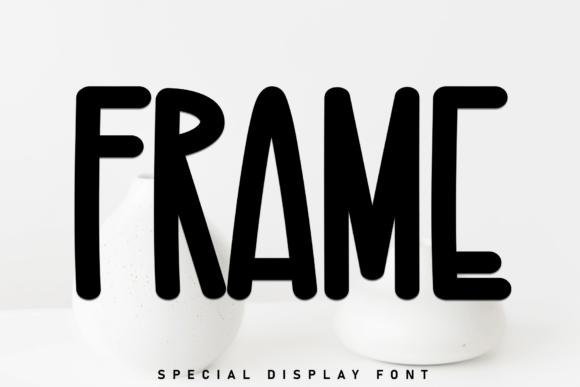
Frame: A Casual Display Font That Balances Style and Readability
There's a particular challenge in finding a typeface that feels both polished and approachable. You want something with enough personality to catch the eye, but not so much that it distracts from the actual message. That sweet spot—where clarity meets casual charm—is exactly where Frame operates. This display font brings a relaxed, modern energy to headlines, branding, and packaging without sacrificing the legibility your audience needs to engage with your work.
A Typeface With a Laid-Back Personality
Frame isn't trying to be the loudest voice in the room. Its clean lines and friendly letterforms give it a quiet confidence that works beautifully across a range of creative projects. Think of it as the font equivalent of a well-fitted t-shirt paired with a sharp blazer—effortlessly stylish without looking like it tried too hard.
What makes Frame visually appealing is its balanced structure. The characters have enough weight to command attention in headlines and posters, yet they maintain a lightness that keeps things feeling open and inviting. There's a subtle playfulness baked into the letter shapes—nothing cartoonish, just enough warmth to make your designs feel human and approachable.
For designers and business owners who've struggled with fonts that feel either too stiff or too whimsical, Frame offers a middle ground. It carries the professionalism needed for commercial projects while injecting the kind of personality that helps brands connect with real people.
Where Frame Shines in Real-World Projects
The versatility of a display font like Frame is one of its strongest assets. It's not locked into a single use case—it adapts to the context you place it in. Here are some practical applications where this typeface genuinely earns its place in a designer's toolkit:
- Branding and Logo Design: If you're building a brand identity that needs to feel modern yet approachable, Frame delivers. It works especially well for lifestyle brands, boutique businesses, cafés, wellness studios, and creative agencies that want to project warmth without losing credibility.
- Packaging Design: On product labels, boxes, and bags, Frame's clean legibility ensures that product names and key messaging stand out on crowded shelves. Its casual tone makes it ideal for artisan goods, food products, and beauty brands targeting a design-conscious audience.
- Social Media Graphics: Bold, readable typefaces perform well on platforms like Instagram, Pinterest, and TikTok where users scroll quickly. Frame's balanced weight and friendly style make it a strong choice for quote graphics, promotional posts, and story templates.
- Websites and Blogs: While primarily a display font, Frame can anchor hero sections, section headers, and call-to-action banners. Paired with a clean sans serif or serif font for body text, it creates a visual hierarchy that guides readers naturally through your content.
- Print Materials: From business cards and flyers to brochures and postcards, Frame brings a polished yet relaxed quality to physical marketing assets. It's particularly effective for event invitations, workshop promotions, and seasonal campaigns.
- Posters and Editorial Layouts: Whether you're designing a magazine spread or a gallery poster, Frame's personality adds visual interest without competing with imagery. It complements photography and illustration rather than fighting for attention.
- Merchandise and Digital Products: For creators selling t-shirts, mugs, tote bags, or digital downloads like planners and worksheets, Frame offers a typeface that feels current and relatable. It resonates with audiences who appreciate thoughtful design but don't want anything overly formal.
How the Right Display Font Strengthens Your Visual Communication
Choosing a typeface isn't just an aesthetic decision—it's a strategic one. The fonts you use directly influence how your audience perceives your brand, how easily they absorb your messaging, and whether they stick around long enough to engage.
Visual consistency is one of the biggest benefits of committing to a well-designed font family. When Frame appears across your website headers, social posts, packaging, and printed materials, it creates a cohesive thread that ties your brand together. People start to recognize your visual language before they even read the words, and that recognition builds trust over time.
Readability matters more than many creators realize. A font can look stunning in a design mockup but fall apart when applied at smaller sizes or on mobile screens. Frame's letterforms are designed with clarity in mind—each character is distinct enough to read quickly, even in fast-scrolling environments or at reduced sizes on printed materials. This practical legibility makes it a reliable workhorse, not just a decorative accent.
Audience engagement often hinges on emotional tone. Frame's casual, friendly energy signals approachability. For small businesses and creators who want their audience to feel welcome rather than intimidated, this kind of typographic warmth can make a meaningful difference in how people interact with your content.
Practical Tips for Working With Frame
Getting the most out of any premium font requires a bit of thoughtful application. Here are some grounded recommendations for integrating Frame into your design workflow:
Test your font pairings. Frame works beautifully alongside neutral sans serif fonts like Open Sans, Lato, or Montserrat for body text. If you prefer a serif companion, try something with modest contrast like Merriweather or Source Serif Pro. The key is letting Frame handle the headlines while a simpler typeface carries the longer reading passages.
Consider your project goals before selecting a style. If the font family includes multiple weights or styles—such as regular, bold, italic, or condensed variants—experiment with each to find the right fit. A bolder weight might work perfectly for a poster headline, while a lighter version could suit elegant invitation text.
Pay attention to sizing and spacing. Display fonts like Frame are designed to perform at larger sizes. At very small sizes, some of its character details may get lost. Use it for headings, titles, and pull quotes, and reserve a more optimized text font for paragraphs and body copy.
Review the licensing terms. Before using Frame in commercial projects—whether that's client work, merchandise for sale, or branded marketing materials—make sure the license covers your intended use. Most premium font licenses are straightforward, but it's worth confirming before you commit to a design system built around a specific typeface.
Mock it up in context. Don't just look at a font specimen page in isolation. Drop Frame into a real layout—a social media template, a product label, a homepage hero section—and see how it performs with actual content. Typography that looks great in a showcase can sometimes feel different when surrounded by images, colors, and real-world copy.
Bringing Personality to Every Project Without Overwhelming the Message
The best creative fonts do something subtle but important: they add character without hijacking the conversation. Frame strikes that balance with intention. It's expressive enough to make a design feel curated and intentional, yet restrained enough to let your content, imagery, and brand story take center stage.
For anyone building a visual identity—whether you're a solo entrepreneur launching your first product line, a marketer refreshing campaign assets, or a designer searching for a display typeface that doesn't feel overused—Frame offers a fresh, grounded option. It's the kind of font that quietly elevates your work, making everything around it look a little more considered and a lot more inviting.
Typography shapes perception in ways we don't always consciously notice. Choosing a typeface like Frame, with its blend of modern clarity and casual warmth, gives your projects a visual voice that feels both professional and genuinely human. And in a landscape crowded with either overly formal or excessively playful fonts, that combination is harder to find than you might think.