Baby Boy: The Bold Display Font That Brings Designs to Life
There's a moment in every design project when you need typography that doesn't just sit quietly in the background—it needs to step forward and command attention. That's exactly what the Baby Boy typeface does. This cute, bold display font has a personality that's impossible to ignore, blending playful energy with a confident, modern edge. If you've been searching for a creative font that adds instant character to your work, Baby Boy might be the design asset you didn't know you were missing.
What makes this particular typeface stand out in a sea of premium fonts? It's the balance. Baby Boy manages to feel fun without being childish, bold without being aggressive, and distinctive without sacrificing legibility. Whether you're a freelance designer juggling client projects, a small business owner building a brand identity from scratch, or a content creator looking for that perfect font for your next social media campaign, understanding how to use a display font like this one can genuinely change the way your work is received.
Understanding the Visual Personality of This Typeface
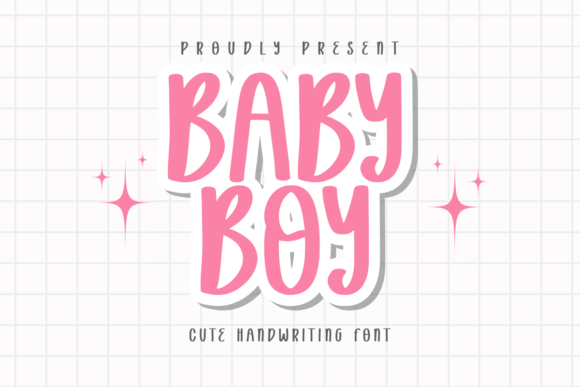
Every font tells a story before a single word is read. Baby Boy communicates warmth, creativity, and approachability through its rounded letterforms and substantial weight. The thick strokes give it a bold presence that works beautifully at larger sizes, making it ideal for headlines, titles, and any context where you want text to be the focal point rather than supporting information.
Unlike many serif fonts or sans serif fonts that prioritize neutrality, a display font like Baby Boy is designed to be expressive. It's the typographic equivalent of a bold color choice in a room full of beige—it draws the eye immediately. This doesn't mean it's difficult to work with, though. Its clean construction and consistent character shapes mean it remains highly readable even at the sizes where display fonts are most commonly deployed.
The style leans into a modern typography sensibility while retaining enough warmth to feel personal. It's not a script font or a handwritten font, but it carries some of that organic energy. Think of it as a typeface that bridges the gap between professional polish and creative flair—a combination that's surprisingly hard to find.
Where Baby Boy Shines: Real-World Applications
Knowing a font looks great in a specimen sheet is one thing. Understanding how it performs across different media and project types is where the real value lies. Here's where Baby Boy tends to make the strongest impact:
Logo Design and Brand Identity
A logo needs to be memorable, and typography plays a massive role in that. Baby Boy works exceptionally well for brands that want to project friendliness, creativity, or a youthful energy without crossing into juvenile territory. Think boutique children's clothing lines, creative agencies, artisan food brands, or lifestyle blogs. The font's bold weight ensures it scales well across different sizes—from a favicon to a storefront sign.
Packaging Design
On a crowded shelf, packaging has about three seconds to grab someone's attention. A bold display font on product packaging can be the difference between being picked up and being overlooked. Baby Boy's distinctive personality makes it a strong candidate for product names, taglines, and featured text on boxes, bags, labels, and wrappers. It pairs particularly well with simpler sans serif fonts for body copy, creating a visual hierarchy that guides the customer's eye naturally.
Social Media Graphics and Digital Marketing
If you create content for Instagram, Pinterest, TikTok, or Facebook, you already know how critical it is to stop the scroll. Bold, readable typography in social media graphics dramatically increases engagement. Baby Boy is the kind of font that looks fantastic overlaid on photos, used in quote graphics, or as the headline type in promotional posts. Because it renders cleanly at various sizes, it works across platforms without losing its impact.
Website Headers and Blog Design
Web design demands fonts that load quickly and look sharp on screens. As a display font, Baby Boy is best reserved for headers, hero sections, and call-to-action text rather than body paragraphs. When paired with a clean serif font or sans serif font for longer text, it creates a compelling visual rhythm that keeps readers engaged. Bloggers and content creators often overlook how much a distinctive header font can improve the overall feel of a site—Baby Boy is a straightforward way to add personality without a complete redesign.
Print Materials and Editorial Layouts
Posters, flyers, magazine covers, and editorial layouts all benefit from a typeface with presence. Baby Boy's bold construction means it reproduces beautifully in print, maintaining its clarity and impact whether it's printed on glossy magazine stock or textured craft paper. For editorial design, it works well for pull quotes, section headers, and feature titles.
Invitations, Merchandise, and Creative Projects
From birthday party invitations to custom t-shirt designs, from sticker sheets to digital planners, Baby Boy adapts to creative projects with ease. Crafters and hobbyists who sell on platforms like Etsy or Shopify will find it especially useful for creating products that feel professionally designed without requiring advanced typography skills.
Pairing Baby Boy with Other Fonts
No font exists in isolation. The most effective designs use font pairing strategically—one typeface for impact, another for information. Baby Boy's bold, expressive nature means it pairs best with fonts that play a supporting role. Here are some practical combinations to consider:
- Baby Boy + a clean sans serif font (like Montserrat, Open Sans, or Lato): This is a classic display-plus-body combination. The sans serif handles paragraphs and smaller text while Baby Boy commands headlines and key phrases.
- Baby Boy + a simple serif font (like Lora, Merriweather, or Playfair Display): This pairing creates a more sophisticated contrast. The serif adds elegance to body text while Baby Boy keeps the overall feel approachable.
- Baby Boy + a minimal script font: For projects that need an extra layer of personality—like wedding invitations or boutique branding—pairing Baby Boy with a delicate script accent can create beautiful visual variety.
The key principle is contrast. If your headline font is bold and expressive, your body font should be quieter and more neutral. This creates a clear hierarchy that makes your designs easier to navigate and more visually satisfying.
Practical Tips for Getting the Most from Your Font Choice
Before committing to any typeface for a project, there are a few things worth checking. First, review the full character set. Does the font include the punctuation, numerals, and special characters you need? Does it support multiple languages if your audience is international? Most premium fonts include these details in their documentation, and it's worth reviewing before you're deep into a project and discover a missing glyph.
Second, test at multiple sizes. A font that looks stunning at 72pt on your monitor might lose its charm at 14pt in a printed brochure. Display fonts like Baby Boy are designed for larger applications, so make sure you're using them in the right context. For smaller text, always fall back to a font optimized for readability at body sizes.
Third, pay attention to licensing. If you're using a font for commercial work—client projects, products for sale, business marketing—make sure your license covers that use. Many fonts come with different licensing tiers for personal versus commercial use, and respecting these terms protects both you and the font designer.
Finally, don't be afraid to experiment. Typography is one of those areas where the best results often come from unexpected combinations. Try Baby Boy in a context you haven't considered before. Use it in a color you wouldn't normally choose. Set it against a background that challenges your assumptions. The most memorable designs often come from designers willing to push past their comfort zones.
Why the Right Display Font Matters More Than You Think
It's easy to treat font selection as an afterthought—something you settle on in the final minutes of a project. But typography is one of the most powerful tools in visual communication. The fonts you choose directly influence how your audience perceives your brand, your message, and your professionalism. A bold, well-crafted display font like Baby Boy doesn't just make text look good. It creates an emotional response. It sets a tone before the first word is processed. It communicates values, personality, and intention in a way that few other design elements can match.
For small business owners and entrepreneurs building a brand identity, investing in quality typography is one of the highest-return decisions you can make. For designers and content creators, expanding your font library with distinctive, versatile options like Baby Boy gives you more creative range and better tools for meeting diverse client needs.
So whether you're designing a logo for a new startup, creating a series of social media templates, laying out a magazine spread, or crafting the perfect birthday invitation, consider what Baby Boy brings to the table. It's bold. It's distinctive. And when used thoughtfully, it has the power to transform good design into something truly memorable.