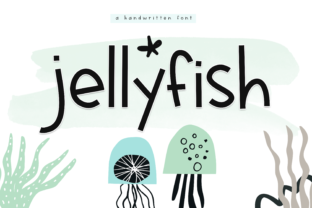
Jellyfish: A Whimsical Typeface for Playful Branding
There’s a certain kind of magic in design that doesn’t take itself too seriously. It’s the playful curve of a letter, the unexpected bounce in a headline, the way a single word can make someone smile before they’ve even read the sentence. That’s the energy a typeface like Jellyfish brings to the table. It’s not just a font—it’s a mood, a personality, a creative spark that can transform the ordinary into something memorable.
At first glance, Jellyfish feels like a burst of childhood nostalgia. Its rounded forms, gentle irregularities, and friendly demeanor evoke the simplicity of hand-drawn letters, yet it carries a polished quality that makes it versatile enough for professional use. This isn’t a font that whispers; it speaks with warmth and approachability, making it ideal for projects that aim to connect on a human level. Whether you’re designing a logo for a new bakery, crafting social media graphics for a family-focused brand, or putting together invitations for a milestone celebration, Jellyfish offers a distinctive voice that stands out without overwhelming.
Where Playfulness Meets Practicality
One of the biggest challenges in design is finding a typeface that balances personality with function. A font that’s too quirky might sacrifice readability; one that’s too rigid might lack character. Jellyfish navigates this balance beautifully. Its letterforms are open and clear, ensuring legibility even at smaller sizes—a crucial factor for packaging labels, blog headers, or digital interfaces. Yet, its subtle irregularities and soft edges give it an organic, handcrafted feel that rigid sans-serifs or traditional serifs often lack.
Consider how this plays out in real-world applications. For a children’s book cover, Jellyfish can set a tone of imagination and adventure. For a wellness brand targeting young families, it communicates care and sincerity. In editorial design, it can highlight pull quotes or section headers with a touch of whimsy, breaking the monotony of body text. The key is intentionality. Jellyfish isn’t a one-size-fits-all solution, but when aligned with a project’s goals, it becomes a powerful tool for visual storytelling.
Building Brand Identity with a Creative Font
Your brand’s typography is often the first impression you make—before a customer reads a single word, they absorb the visual tone. A typeface like Jellyfish can help shape that impression deliberately. Imagine a local ice cream parlor using Jellyfish for its signage and menu boards. The font’s playful curves mirror the swirl of soft-serve, while its readability ensures customers can quickly find their favorite flavor. Or think of a children’s educational app using Jellyfish in its interface. The font’s friendly appearance makes learning feel approachable, reducing intimidation for young users.
Consistency is another critical aspect of branding. When you select a typeface that reflects your brand’s values, you create a cohesive visual language across all touchpoints. Jellyfish, with its distinct personality, can tie together a website’s headers, social media graphics, packaging, and print materials. This consistency builds recognition—over time, your audience begins to associate that playful, approachable font with your brand’s identity.
Pairing and Practicality: Making Jellyfish Work for You
No font exists in isolation. The true art of typography lies in pairing—combining typefaces to create hierarchy, contrast, and balance. Jellyfish, as a display font, naturally shines in headlines, logos, and short bursts of text. Pair it with a clean, neutral sans-serif for body copy, and you achieve a dynamic yet readable layout. For example, a wedding invitation suite might use Jellyfish for the couple’s names and event details, while a simple serif or sans-serif handles the finer print. This contrast ensures the whimsical font remains impactful without causing visual fatigue.
When testing font pairings, consider the mood you’re aiming for. Jellyfish pairs well with minimalist typefaces that don’t compete for attention. Think of it as the lead singer in a band—the supporting instruments should complement, not overpower. For digital projects, always test how the font renders on different screens. Its rounded forms may appear bolder on mobile devices, so adjusting size or spacing might be necessary to maintain clarity.
Licensing and Long-Term Use
Before integrating any font into a commercial project, it’s wise to review the licensing terms. A premium font like Jellyfish often comes with specific permissions regarding usage—whether it’s for print, digital, merchandise, or client work. Understanding these terms upfront prevents legal headaches later. Many designers invest in a commercial license not just for legal compliance, but to support the creators behind the typefaces they love. It’s a small but meaningful step in sustaining the design ecosystem.
Also, explore the full family of styles included with the font. Some display typefaces offer multiple weights or variations—like regular, bold, or italic—that can expand your design toolkit. Even if Jellyfish is primarily a display font, having access to different versions allows for more nuanced typographic hierarchies. For instance, using a bolder weight for main headlines and a lighter weight for subheadings can create visual rhythm without introducing a second typeface.
Final Thoughts on Choosing Your Type
Typography is one of the most powerful tools in a designer’s arsenal. It guides the eye, sets the tone, and communicates emotion often more directly than imagery. Choosing a typeface like Jellyfish is a decision to embrace approachability, creativity, and a touch of nostalgia. It’s a font that invites interaction, whether on a poster promoting a community event, a blog header for a lifestyle brand, or the label of a handcrafted product.
As you explore typefaces for your next project, ask yourself: What story do I want to tell? Who am I trying to reach? How do I want them to feel when they encounter my brand? If the answer involves warmth, playfulness, and genuine connection, then a whimsical display font might just be the missing piece. Jellyfish offers a unique blend of charm and clarity—a reminder that great design can be both beautiful and functional, serious in its craft but joyful in its expression.